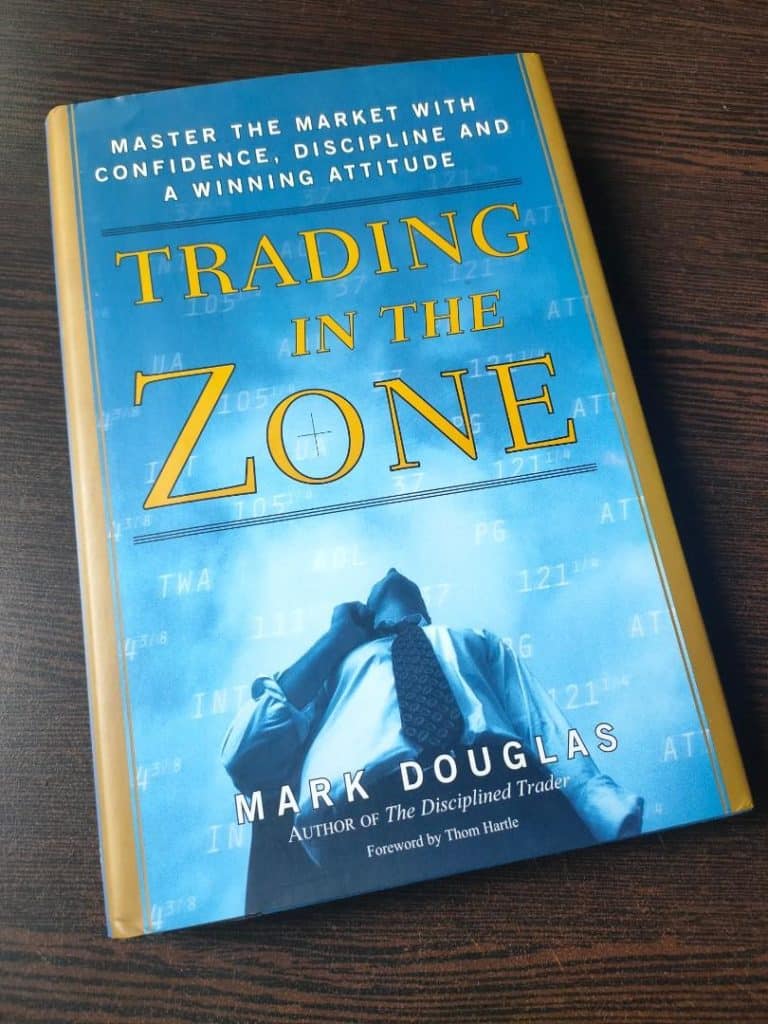
For Mark Douglas and many short-term traders, technical analysis proves especially effective for anticipating how prices will move, because it reads the participants’ behavior directly. That said, with the hindsight of 2026, this is not an absolute truth: the current consensus leans instead toward the complementarity of the two approaches — technical analysis for timing and the short term, fundamental analysis for value and the long term. Technical analysis remains powerful nonetheless, and a great many traders are chiefly interested in their own psychology when facing the market.
There is an important distinction between two groups of traders: those who have learned to make profits consistently, and everyone else. Intelligence and solid market analysis can certainly help you succeed, but they are not the decisive factors that set consistent, high-performing traders apart from the rest.
According to Mark Douglas, the best traders think differently from everyone else.
Traders who manage to push past their consistency threshold usually go through difficult moments — both emotional and financial — before they develop the kind of attitude that will let them perform effectively in the market.
Trading is full of paradoxical, contradictory ways of thinking, which makes the principles that lead to success extremely hard to teach.
The best traders don’t just take risks — they have also learned to accept and embrace that risk.
There is an enormous psychological gap between assuming you are taking risks — because you are placing trades — and fully accepting the risk inherent in every trade. Learning to accept risk is an indispensable skill in this activity; it is the most important one to acquire. To go further on this crucial topic, read our complete guide to risk management in trading.
The market is neutral; it fluctuates, but it always provides information and the chance to find opportunities. 95% of the mistakes you will make come down to your attitude toward:
- mistakes
- fears
- missed opportunities
- money poorly used.
These are what I call the trader’s four main fears.
Technique is necessary to achieve consistent results, but it would seem that the market’s behavior is the cause of our inconsistency. As a result, the best way to avoid losses is to become more consistent and to learn more about the markets.
The market presents many variables that are often contradictory. It is up to you to select the ones that fit — the ones that suit you! In any case, no matter how well we know the market and technical analysis, we never know enough to anticipate every possible move the market can make.
Entering the Zone: understanding the real psychological dangers of trading
The appeal of trading: a freedom that demands a mental framework
Anything is possible, and total freedom is part of that. Yet this calls for deep, constant self-questioning; you have to build a mental framework for yourself. It also matters to stay curious and literally hungry to learn.
The hidden dangers: the gap between our desires and market reality
Our desires arise from our inner mental environment; they are satisfied by the outer environment. When these two environments match, we are in a state of inner balance. When we are denied the right to satisfy that need or that desire for balance, we feel a lack and work to fill that void through action.
Otherwise, it is important to understand how denied or unmet desires affect our ability to stay focused while trading.
The safeguards: building your own trading rules
To be effective in trading, we need rules, and since the market — unlike society — does not provide them, we have to own and reinforce such a framework for ourselves.
The reluctance to set strict rules for ourselves
On one hand we accept the rules, but on the other we don’t really intend to do what they call for. We all have our moments of weakness! Considerable effort and focus will be required to build the mental framework and to offset the negative effects of our denied desires in order to secure our success.
Failing to take responsibility
To become consistent in trading, you have to become 100% responsible for your own actions. This work of self-reflection also relies on concrete tools: keeping a trading journal is one of the best ways to make your decisions objective and to build the responsible mindset Mark Douglas describes.
Dependence on random rewards
Reward is a source of hope, but its random nature leaves us in a state of dependence — yet another form of resistance that requires a mental framework to generate the consistency the trader is seeking.
Internal control versus external control
Our upbringing has prepared us to operate within a given social environment.
The market, however, has no higher authority that sets limits and responds to what matters to us. A trader’s success comes from their ability to manage and control their own environment. This is precisely why it is essential to choose a stable, reliable platform to execute your trades: OKX is, in this respect, a recognized MiCA-regulated platform, valued by crypto traders for its security and the quality of its execution.
Entering the Zone: fully owning your responsibilities as a trader
Shaping your state of mind: the first goal must be to learn to think like a high-performing, consistent trader, then to adopt a winning attitude, without fear of making mistakes, and while keeping your euphoria in check after the trader has strung together a run of winning trades.
Responding to losses: being a responsible trader means acknowledging and accepting, in the deepest part of yourself, that it is you — and not the market — who is entirely responsible for your successes and your failures.
Your mind must free itself from fear, anger, regret, the feeling of betrayal, despair and disappointment.
Those who win, those who go through highs and lows: euphoria and self-destruction are two psychological forces that will have an extremely negative effect on your results.
If you are confident, it is not because the market gave you that confidence. It is because your attitude and your beliefs are aligned and allow you to move forward. You stay confident simply because you are constantly learning.
Consistency in trading: above all a mindset
To become consistent, you must learn to think in a way that no longer leaves you vulnerable to the conscious or unconscious mental processes that hide, neutralize or filter information on the assumption that doing so will make you happy, give you what you want and spare you from suffering. Learn to accept risk!
Understanding risk: accepting risk means accepting the consequences of your trades without emotional discomfort or fear.
Here is a line of reasoning that can help you:
You let the market unfold…
You define all the opportunities that interest you
However, you select only a small enough number of them to avoid being affected psychologically. In this way, you are likely to eliminate a significant portion of the inner conflicts you face every day as a trader.
The dynamics of perception: seeing the market as it is
Behaving like a professional means being able to see the market from a strictly objective point of view, without the slightest distortion. Debugging your mental software in order to perceive opportunities — that is where the trading process begins.
Perception and learning
Our capacity to learn is not unlimited.
The energy you hold will let you recognize a chart; it acts as a force in your eyes and lets you recognize the various events you have been through and from which you have drawn real lessons.
The power of association
The mind tends to associate situations when they resemble one another.
This is an unconscious, natural mental function. What happens next is a projection. As a trader, one of your fundamental goals is to perceive the available opportunities without interpreting them as positive or negative.
From the market’s point of view: what really moves prices
The market’s most fundamental characteristic is that it can do virtually anything, at any time.
It is driven by three types of participant:
- traders who think prices are low
- those who think prices are high
- those who watch and wait.
Here is the secret of trading, whatever each person’s ability:
- Trade without fear, where your confidence lies: know how to choose the easy path!
- Perceive what the market is offering
- Stay focused on the flow of opportunity in the present moment
- Enter the zone spontaneously
The trader’s edge: thinking in terms of probability
A paradox: random outcomes, consistent results
At the casino, if you focus on each individual round, there will be a random distribution, and you cannot tell the winning rounds from the losing ones in advance.
Across all the rounds, the opposite is true.
The best traders operate in a paradigm similar to the one experienced by the casino and by professional poker or blackjack players, for example. If you always see the same faces at the final tables of the big poker tournaments, I can assure you it has nothing to do with luck or chance. This analogy is so telling that we have devoted an entire guide to it: discover how to turn poker into training for trading and strengthen your probabilistic thinking.
Trading in the present moment
For a trading sequence to repeat exactly as it did in the past, every trader would have to be active at that moment and would once again have to be present and interact in exactly the same way. The odds of such a sequence repeating are zero.
Another fundamental characteristic of market behavior is, quite simply, the present moment. It happens only once, and each sequence remains independent of all the others, even though you will regularly find similarities among them.
Probability
Once you have trained yourself to think in terms of probability, you will fully accept every possibility and take into account forces unknown to the majority. You will know how to estimate and predefine your risk, and to remain unaffected by the notion of being right or wrong.
Managing your expectations
Expectations are mental representations of the shape the future will take. As a protective measure, they shield us from potentially painful information to come. Without specific expectations or mental limits, you place no limit on how the market can express itself. Stay flexible in your expectations, and keep your objectivity.
Eliminating emotional risk
To eliminate emotional risk, you must neutralize your expectations about what the markets will or will not do. You absolutely must grasp this shift to reach the next level.
Here are five guiding principles of this paradigm:
- Anything can happen to you
- You don’t need to know precisely what is going to happen in order to make money.
- There is a random distribution between wins and losses. This holds for any set of variables that define an edge.
- An edge is nothing more than an indication of a higher probability of one event happening rather than another
- Every moment in the market is unique
Working on your beliefs to trade better
Defining the problem is essential
What prevents us from perceiving every “present moment” as a chance to do something right or appropriate?!
Quite simply, our fears. What’s more, we are often convinced we hold the absolute truth once we already feel self-confident. Still, remember the previous paragraph…
What are the goals?
To make money consistently and to master certain psychological skills
The skills
Consistency is the result of an objective mindset
Objectivity
You have nothing to prove to anyone! If you make 3% P&L every week for years, that’s excellent, even if it may not impress many people over a few weeks.
The present moment
Trade while keeping in mind that every moment is unique.
The nature of beliefs and their impact on our decisions
Our beliefs shape the way we live.
- They govern our perception and our interpretation of the information around us, in line with what we believe.
- They create our expectations
- Everything we decide to do will be consistent with what we believe
- Our beliefs shape how we feel about the results of our actions
The concrete impact of beliefs on your trading
From the moment we acquire a belief, it seems to take on a life of its own and disconnect from reality. The secret to changing them lies in understanding them, and in letting them die by draining them of their energy.
Self-destructive beliefs are unconscious and show up in our trading as a loss of focus and concentration, along with a number of predictable mistakes such as placing an order against your bias or letting a great trade slip by. You have to be aware of the presence of such beliefs in order to neutralize them when they start to express themselves.
Thinking like a professional trader
If I had to reduce trading to its simplest form, I would say it is a game of chance in which you recognize sequences.
Here are the stages of a trader’s development:
- You build the confidence needed to operate in an environment of unlimited possibilities.
- You learn to execute a trading system flawlessly
- You train yourself to think in terms of probability (the 5 fundamental rules)
- You build a strong, unshakeable faith in your own consistency, expressed as a win rate and not as a win rate over the last 2 or 3 trades.
The mechanics of trading
Specifically designed to establish this type of skill (confidence, assurance, a probabilistic approach), it translates into a steadily growing equity curve with a few minor setbacks that are the natural consequence of edges that were missing “a little something.”
Steady growth will depend on your ability to systematically eliminate every one of your predispositions to make mistakes driven by fear and euphoria…
You must acquire the skills that let you execute your method mechanically, never allowing an emotion to divert your attention from the present moment. This is exactly where Mark Douglas’s entire message plays out: technique gives you an edge, but it is mental discipline that turns that edge into consistent results. Once these automatic habits are in place, you stop being at the mercy of the market — you observe it with detachment, you seize the opportunities it offers, and you accept every outcome without emotional pain. This is exactly what Douglas calls “entering the zone”.
Key takeaways from Trading in the Zone
If you were to keep only the essentials of Mark Douglas’s book, remember these points:
- Mindset makes the difference: it is neither intelligence nor analysis that separates consistent traders from the rest, but their state of mind.
- Genuinely accept the risk: placing trades is not enough — you have to embrace the risk inherent in every trade, without fear or discomfort.
- The trader’s four fears: mistakes, fears, missed opportunities and money poorly used are behind 95% of your errors.
- Think in probabilities: think in series, like a casino or a professional poker player, not trade by trade.
- Stay in the present moment: every market moment is unique and independent of the ones before it.
- Build your mental framework: take 100% responsibility, set your own rules and stick to them.
Conclusion: take action
“Trading in the Zone” is not just another book about indicators or strategies: it is a complete reset of your relationship with the market and with yourself. In it, Mark Douglas shows that consistency is not a gift, but the fruit of rigorous mental work that is within reach of anyone willing to commit to it.
Reading the book is strongly recommended, but real change comes from practice. To put these principles into action, deepen your understanding of trading psychology, structure your risk management and start today to keep a trading journal to make your decisions objective. It is by repeating these habits, day after day, that you will eventually “get into the zone.”
FAQ — Trading in the Zone by Mark Douglas
What is the book Trading in the Zone about?
“Trading in the Zone” (published in French as “Entrez dans la Zone”) is a book on trading psychology. In it, Mark Douglas explains why mindset — and not market analysis alone — makes the difference between consistent traders and the rest: accepting risk, thinking in probabilities and staying disciplined in the present moment.
Who is Mark Douglas?
Mark Douglas (1948-2015) was an American trader and coach, regarded as a timeless reference in trading psychology. He is also the author of “The Disciplined Trader” (1990), which came before “Trading in the Zone” (2000).
What are the trader’s four main fears according to Mark Douglas?
According to Douglas, roughly 95% of mistakes come from our attitude toward four fears: the fear of making mistakes, fear itself, the fear of missing an opportunity and the fear of misusing your money.
Is the book suitable for beginners?
Yes. It assumes no advanced technical knowledge and speaks to any trader who wants to understand the mental origin of their mistakes. It pairs ideally with a practical guide to risk management.