Captain-Trading brings you regular coverage of DeFi (Decentralized Finance). Here is an essential article to warn you against the scams that are rampant in the world of cryptocurrencies, and now more specifically within the DeFi ecosystem. Before connecting your wallet to any protocol, take the time to understand the fundamentals: knowing how to create and secure a MetaMask wallet is the very first building block for moving through this environment with peace of mind.
The excitement around DeFi doesn’t attract only serious investors. This wave of interest has also given rise to scams of every kind, preying on the enthusiasm and sometimes the naivety of newcomers to the market. The underlying problem is simple: on a DEX like Uniswap, anyone can create and list a token in just a few minutes, with no validation whatsoever. No authority checks that a token actually corresponds to the project whose name it bears.
On Uniswap, the most common scams rely precisely on fake DeFi tokens. I’ve identified the 3 most widespread frauds so you can spot them easily and thereby protect your capital. For beginners, I also recommend using a reliable centralized platform like OKX for your first cryptocurrency purchases before venturing into DeFi.
2026 Update — read this carefully before the examples
This article was published in 2020, at a time when several major DeFi protocols did not yet have an official token. Scammers took advantage of this to sell fake versions before the real listing. Today, these projects all have their official token: CRV (Curve, launched in mid-August 2020), DYDX (dYdX, launched in August 2021) and TORN (Tornado Cash) exist and are recognized.
The lesson doesn’t change, it only grows stronger: never buy a token “ahead of time” before its official listing. Back then, the counterfeit preceded the real token — exactly the trap described below. Also worth noting: Tornado Cash was placed on the OFAC sanctions list in August 2022, sanctions that were lifted on March 21, 2025 following a court decision. A project can therefore change legal status along the way — all the more reason to always check the current context before investing.
DeFi Scam #1: “Copycat” Tokens That Mimic Real Protocols
One of the most common scams involves creating tokens that carry exactly the same name as protocols that already exist and are well established. Scammers bank on the confusion and the lack of attention of investors in a hurry.
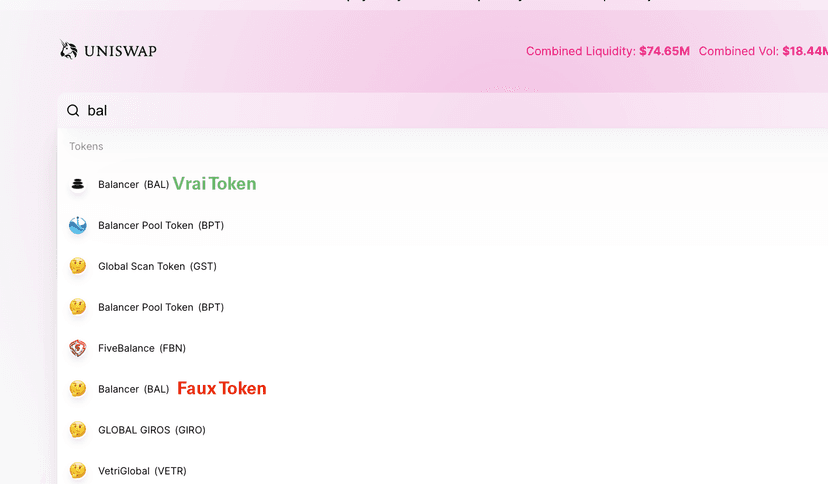
A concrete example: the original BAL token (Balancer) has an official logo, whereas the fake token has none. Both display the same name, but one of them will never be listed on the major exchanges! It’s often these small details (missing logo, suspicious contract, low liquidity) that let you unmask the scams. Stay alert and never leave anything to chance before clicking “Swap.”
DeFi Scam #2: Fake Tokens of Projects Not Yet Listed
Many protocols haven’t yet officially launched their token… yet still see their “counterfeit token” appear on Uniswap, sometimes several weeks before the actual listing. Scammers exploit the community’s anticipation and impatience.
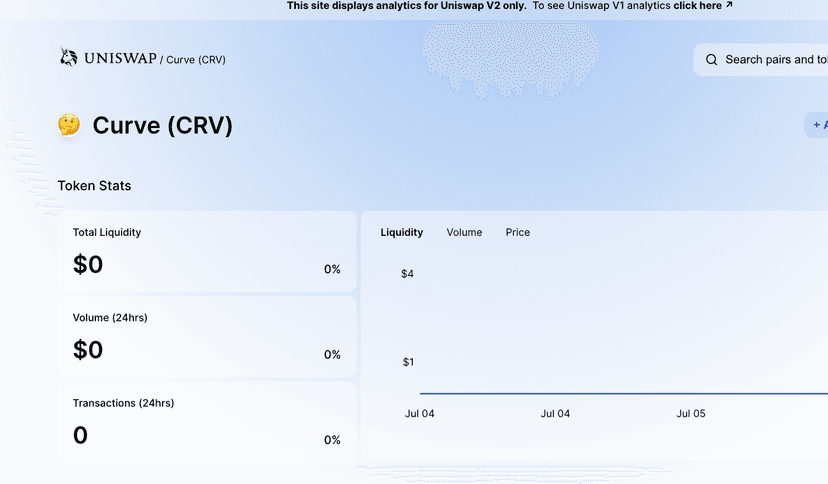
This was the case, for example, with the fake Curve token that was circulating before the protocol issued its official token — the real CRV only arrived in mid-August 2020, that is, after the fakes had already trapped hasty buyers. Another typical example from that period: tokens supposedly tied to Tornado.Cash sold under the ticker “TC,” while the project didn’t yet have an official token. The habit to remember is timeless: as long as a project hasn’t officially announced its token contract, any token bearing its name is a counterfeit.
DeFi Scam #3: Ghost Tokens That Never Existed
Some protocols have never had a token and probably never will; yet fake tokens bearing their name circulate on DEXs. Scammers create tokens off the back of a trending technology or project, with no connection whatsoever to the founding team. Poorly informed investors, convinced they’re holding a gem, then fall into the trap.
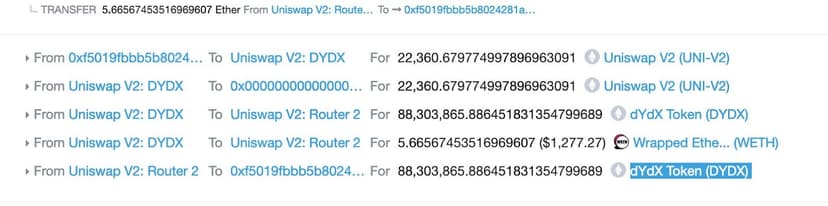
Here’s an example of a transaction on a so-called DYDX token, at a time (mid-2020) when the protocol had no official token and had never announced it would issue one. The real DYDX was ultimately launched only in August 2021: in other words, everyone who had “bought DYDX” before that date had bought nothing but thin air.
Beyond Fake Tokens: Honeypots, Rug Pulls and Dangerous Approvals
The three scams above rely on name spoofing. But the DeFi ecosystem has seen more technical traps emerge that you absolutely must know about in 2026.
The Honeypot: A Token You Can Buy but Never Sell
A honeypot (“honey pot”) is a token whose code (smart contract) allows buying but blocks reselling for everyone except the creator. You watch your position climb, you’re delighted… then it’s impossible to sell. It’s a trap coded directly into the contract. Tools such as a honeypot detector or transaction simulation let you spot these tokens before clicking “Swap.”
The Rug Pull: The Team Drains the Liquidity and Vanishes
In a rug pull (“pulling the rug”), the project’s creators abruptly withdraw all the liquidity from the pool, sending the price crashing to zero in a single transaction. Understanding how pool liquidity works — its depth, slippage, who holds the LP tokens — is your best defense: a tiny pool, unlocked liquidity or liquidity held by a single address are obvious red flags.
Contract Approvals (Token Approvals)
When you interact with a protocol, you grant it permission to spend your tokens. An “unlimited” approval granted to a malicious contract can drain your wallet later, even after the swap. Get into the habit of regularly revoking the permissions you no longer need through an approval-management tool.
How to Avoid DeFi Scams: Our Vigilance Tips
Decentralized finance and cryptocurrency demand extreme vigilance when you invest or deposit your funds. Above all, don’t let “FOMO” (fear of missing out) take over… Believing you’re missing “the opportunity of the century,” people often do irreparable damage by forgetting the basic rules of security. It’s exactly the same principle as in traditional trading, where mastering psychology and solid risk management make all the difference between an investor who lasts and one who goes broke.
Before every purchase, systematically check:
- The contract address on the project’s official website (and nowhere else);
- The contract on Etherscan: is it verified? How long has it existed? How many holders?
- The token’s CoinGecko / CoinMarketCap page: a serious project is listed there with the official Uniswap link;
- The pool’s liquidity and whether it is locked;
- The presence of the official logo, the real trading volumes, and the community’s track record;
- Trusted token lists, which gather the validated contracts.
Take the time to research thoroughly and to talk with the community before clicking! In DeFi, it’s better to miss an opportunity than to lose all your capital on a fake token.
FAQ — DeFi Scams and Fake Tokens
How do I check that a token is authentic on Uniswap?
Get the contract address from the project’s official website (never through a link received on social media), then compare it with the one shown on Uniswap. Cross-check with the project’s CoinGecko or CoinMarketCap page, which points to the correct contract. Finally, verify on Etherscan that the contract is verified, old, and held by a large number of addresses.
What is a honeypot in DeFi?
A honeypot is a token whose smart contract lets you buy but prevents you from reselling. The price appears to rise, but you’re trapped: only the creator can sell. A honeypot detector or a simulation of the sell transaction lets you identify it before buying.
What is a rug pull?
A rug pull happens when a project’s team withdraws all the liquidity at once, collapsing the price to zero. Low, unlocked, or single-address-concentrated liquidity is a major warning sign.
Do you need a wallet to use DeFi?
Yes. To interact with a DEX like Uniswap, you need to connect a non-custodial wallet. First learn how to create a MetaMask wallet and secure it: it’s the foundation of any activity in decentralized finance.