Warren Buffett: Biography, Investment Strategy & Famous Quotes
By Captain Trading··8 min
Contents15 sections
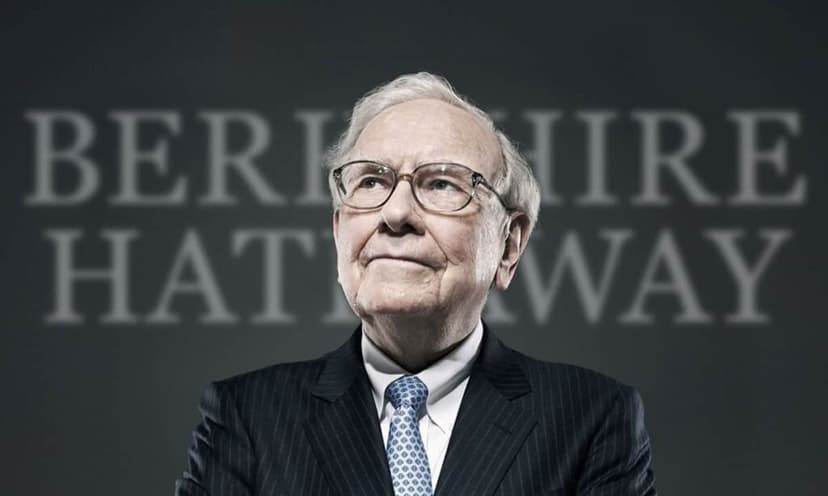
When it comes to building wealth and long-term investment strategies, Warren Buffett, the American businessman and philanthropist, stands out as one of the most successful investors of all time. From humble beginnings to one of the world’s largest fortunes, the “Oracle of Omaha” built an impressive legacy that continues to inspire today’s investors and traders. In this portrait, we will explore the secrets behind Warren Buffett’s success: his early days, his value investing strategy, his advice for building wealth, his role as an inspiration and his legacy. His methods have become legendary, and his fortune was built on careful planning, iron discipline and sound decision-making. Long-time CEO of Berkshire Hathaway — a holding company that owns many well-known businesses such as GEICO, Dairy Queen and Fruit of the Loom — he handed the reins to Greg Abel on January 1, 2026 and remains Chairman of the board of directors.
2026 update: at 95, Warren Buffett stepped down as chief executive of Berkshire Hathaway on January 1, 2026, handing operational control to his designated successor Greg Abel — the first leadership change since he took over the company in 1965. Buffett remains Chairman of the board and the group’s reference shareholder. His fortune, estimated at around $147 billion in early 2026 (Bloomberg Billionaires Index), still places him among the eleven largest fortunes in the world.
Warren Buffett: The Story of an Exceptional Investor
Warren Buffett’s path to success began in childhood. Born in Omaha, Nebraska, in 1930, he grew up in a middle-class family. Buffett started his investing career at the age of 11, buying his first shares with money he had earned delivering newspapers. Despite his family’s modest means, Buffett was an excellent student and finished high school at 16. He then attended the University of Nebraska-Lincoln, where he studied business and economics before continuing his studies at Columbia Business School, where he studied under Benjamin Graham, regarded as the “father of fundamental analysis.”
After graduating, Buffett worked as a financial analyst in New York before returning to his hometown of Omaha, Nebraska, to found his own investment firm, Buffett Partnership Ltd, at the age of 26. In 1965, he bought the textile company Berkshire Hathaway, which became the foundation of his financial empire. Turned into a holding company, it began generating impressive returns almost immediately.
He is notably known for having played an active part in the history of the New York Stock Exchange (NYSE) and for becoming one of the first self-made American billionaires.
Contrary to popular belief, Warren Buffett has never written a book. His reference writings are the annual letters to Berkshire Hathaway shareholders, penned every year for decades and studied around the world as a true investing manual. The collection “The Essays of Warren Buffett”, compiled by legal scholar Lawrence Cunningham, gathers and organizes these letters by theme: it is the most accessible gateway to his thinking.
Warren Buffett’s Investment Philosophy: Value Investing
Buffett’s success quickly caught the attention of other investors, and he became a highly sought-after investment advisor. His method relies on a combination of fundamental analysis and value investing, allowing him to generate exceptional returns year after year.
Warren Buffett’s investment philosophy is often described as “value investing”: it consists of buying stocks that are undervalued relative to their fundamental value. He strives to understand the companies he invests in by meticulously studying their financial statements and meeting their executives. He looks for companies with a durable competitive advantage (the famous “moat”) and solid management. Buffett’s premise is that the stock market is a collection of individual businesses, not just an index to speculate on: you have to look beyond the market noise and focus on each company’s fundamentals.
Buffett is also known for his “buy and hold” strategy — in other words, long-term portfolio management. Instead of focusing on short-term market trends, he prefers to invest in companies he believes are undervalued over the long run. This approach stands in stark contrast to day trading and scalping, which he has often criticized. He has also been skeptical of active management, arguing that few investors manage to beat the market over the long term.
Buffett also attaches great importance to compound interest, which involves reinvesting investment income to generate exponential returns over time. He sees compounding as the key to long-term wealth creation, and he has applied this approach with resounding success. This compounding logic can also be found in modern strategies such as the dollar-cost averaging (DCA) strategy, particularly popular among long-term investors.
Finally, Buffett applies a disciplined, concentrated approach. He avoids investing in companies he does not understand — a golden rule he calls his “circle of competence” — and takes the time to do thorough research before every decision. He favors rigorous risk management: a portfolio diversified in a reasoned way, but with meaningful positions in his strongest convictions, and constant attention to cash flow as well as recurring, predictable earnings.
Warren Buffett: A Source of Inspiration and a Living Example for Investors
Warren Buffett’s story has become a source of inspiration for investors around the world. His success is a testament to the power of hard work, discipline and a clear investment strategy. He has become a living example of what is possible with the right approach, and his story continues to motivate many beginner and experienced investors alike.
Furthermore, Buffett’s success has underscored the importance of adopting a long-term view. He demonstrated the effectiveness of a buy-and-hold strategy and showed that impressive returns can be generated through patience. Finally, his journey also highlighted the need to master your investor psychology and stay disciplined to succeed in the financial markets.
Investment Mistakes to Avoid, According to Warren Buffett
Despite his phenomenal success, Warren Buffett has made a few mistakes over the course of his investing career. These mistakes should serve as lessons for investors. One of Buffett’s most notable errors was his initial investment in Berkshire Hathaway itself: he has often publicly acknowledged that buying that declining textile business was one of his worst decisions, before he transformed it into a holding company.
Another famous Buffett mistake was missing several major tech opportunities (Google, Amazon in their early days), precisely because they fell outside his circle of competence. Finally, Buffett also admits he was sometimes too patient with certain losing investments. These mistakes are a reminder that no investor, not even the best, is infallible. Before diving in, take the time to learn about the most common pitfalls: we cover them in detail in our guide to the 12 investment mistakes to avoid.
Warren Buffett’s Legacy and His Impact on Financial Markets
Warren Buffett’s legacy has had a lasting impact on the investment world. His success has inspired countless investors to adopt a more disciplined, long-term approach. His investment strategies have become the benchmark for many fund managers, and his story has become a source of inspiration for anyone looking to build solid wealth.
Moreover, Buffett’s success also has a direct impact on the market. His investment decisions often trigger what is known as the “Buffett effect” on the share prices concerned, and his influence is felt across the entire US market. With leadership handed over to Greg Abel in early 2026, all eyes are now on Berkshire Hathaway’s ability to carry this philosophy beyond its founder.
Warren Buffett and Cryptocurrencies: Bitcoin and Ethereum
Cryptocurrencies are not Buffett’s cup of tea — he even called Bitcoin “rat poison squared.” Yet the crypto market offers unique opportunities for modern investors looking to diversify their portfolio. If you want to get started in this space, I recommend mastering the basics first with our guide on Bitcoin and the one on Ethereum. To put this into practice, I recommend using a regulated and reliable platform like OKX, ideal for buying and storing your crypto safely. And if you want to go further, take a look at my Crypto Investing & Portfolio Diversification course. In the meantime, to learn more about Buffett, I recommend his annual meetings!
Warren Buffett: The Committed Philanthropist
Beyond his success as an investor, Buffett is also known for his philanthropy. He has pledged to give away the bulk of his fortune to charitable causes, notably the Bill and Melinda Gates Foundation, through the “Giving Pledge” he co-founded. He is also an advocate of financial education and corporate social responsibility. Of course, everyone is free to form their own opinion on this kind of philanthropy…
Warren Buffett: Anecdotes and Famous Quotes
Anecdote 1: The Billionaire’s Understated Humor
Famous for his modest lifestyle, Buffett likes to defuse the seriousness of finance with self-deprecating humor. He still lives in the house he bought in Omaha in 1958 and readily admits his fondness for cheeseburgers and Coca-Cola. “I spend a little over a hundred dollars a year on my hair,” he once joked, to illustrate that a great fortune changes nothing about what really matters: simplicity and discipline remain his best allies.
Anecdote 2: Wealth as Buffett Sees It
He once replied to a journalist who asked him what wealth had changed for him: “When you’re rich, most people think it’s easy, but I can assure you it’s a demanding job.”
FAQ: Everything You Need to Know About Warren Buffett
Is Warren Buffett Still the CEO of Berkshire Hathaway?
No. Since January 1, 2026, Greg Abel has held the position of chief executive officer (CEO) of Berkshire Hathaway. Warren Buffett, 95, remains Chairman of the board of directors and the reference shareholder. It is the first leadership change since he took over the company in 1965.
What Is Warren Buffett’s Value Investing?
Value investing consists of buying shares of solid companies when they trade below their fundamental value, then holding them for the long term (“buy and hold”). Buffett favors companies with a durable competitive advantage (the “moat”) and reliable management, while staying within his “circle of competence.”
Has Warren Buffett Ever Written a Book?
No, Buffett has never published a book. His thinking is set out in his annual letters to Berkshire Hathaway shareholders, collected and organized by theme in “The Essays of Warren Buffett” by Lawrence Cunningham.
Warren Buffett: An Accomplished Investor and a Timeless Role Model
Warren Buffett is one of the most successful investors of our era, and his success is a source of inspiration for millions of people. His investment strategies have become legendary, and his legacy has had a lasting impact on the world of finance. From humble beginnings to his rise among the greatest fortunes on the planet, Buffett has built an impressive legacy that continues to inspire today’s investors. By understanding his philosophy and strategies, investors can gain valuable insight into how to build lasting wealth and succeed in the markets.
This portrait is meant to be enriched over time with juicy anecdotes reminding us just how much of a role model Warren Buffett is for any investor who manages money like a “prudent steward.” To me, he is a true mentor because he keeps his feet on the ground: when everyone else is euphoric or bearish, he remains unshaken because he sticks to the plan he set! A precious lesson, just as applicable to the stock market as to crypto and forex trading.