If you’re drawn to scalping, it’s probably because you need to smooth your profit curve. Steadier but less substantial, the profits scalping delivers let you approach trading crypto in a way that differs from swing trading or day trading!
Less stressful in some respects, scalping is still no walk in the park, because it demands that you stay close to your screens to react in real time.
That’s exactly what life as a scalper will demand of you: time and unwavering attention.
Do you want to take your trading skills to the next level?
If so, mastering a solid scalping strategy could be the answer for you. Scalping is increasingly practiced among traders. It consists of banking many small profits on small price moves by trading on very short timeframes.
To succeed, it’s important to use the right tools and the strategies that suit you.
In this article, we’ll look at several strategies and tools that can help you approach scalping in the direction and with the method I use myself.
We’ll look specifically at the links between price action and Fibonacci retracements, for example. These tools are widely used by traders to identify trends and notable levels on a market. We’ll touch on a few others briefly to give you some avenues to explore. Finally, we’ll see how to use Bollinger Bands on very short timeframes.
By the end of this course, you’ll know more about using these tools to get consistent results in scalp trading. So let’s dive into my thrilling world — the world of scalpers (of cold, hard cash)!
Scalping: Definition and Meaning
Sometimes called “micro-trading” or “baby-steps” trading, scalping consists of banking small profits on small price moves. This technique demands that traders be especially skilled (both technique and experience).
The scalper has to be able to make quick decisions, because the windows to get in are very narrow even if they come up regularly.
Scalpers can perfectly well hold their positions for just a few seconds or a few minutes and still hit their profit targets (R:R | Risk to Reward).
Scalp trading is popular among “day traders,” who look to make profits quickly and frequently. That said, scalp trading demands more discipline, focus, and diligence.
Scalping: 3 Simple Strategies
You can test several scalp trading strategies on a testnet before diving in. The idea is to find the one that suits you best for making short-term profits. The three main strategies are:
Trend Scalping
Scalping with the trend means following the market trend and opening positions in the direction of that trend.
Range Scalping
Scalping in a range means building a profitable trading strategy when price moves within a horizontal channel. Basically, you open long positions near support and sell orders near resistance.
News Scalping
News scalping means capitalizing on the sharp price moves that occur after major economic news is released. To do this, a good news scalper keeps a daily economic calendar close at hand — like the one offered by our Crypto Watch !
For training on the scalping strategies I actually trade, I invite you to browse the VOD courses I have for sale. My Swing Failure Pattern and Break Down Retest strategies are explained there in full. As a reminder, all my VOD courses bring together theory and practice on top of turnkey trading strategies!
Scalping and Bollinger Bands
Bollinger Bands are a fairly popular tool used to identify a trend and define trading signals. Bollinger Bands are made up of three lines: the upper band, the middle band, and the lower band. The middle band is a simple moving average, while the upper and lower bands sit two standard deviations away from the middle band. Bollinger Bands are used to measure market volatility. When price is close to the upper band, it indicates that the market is overbought, while when price is close to the lower band, it indicates that the market is oversold. In a way, Bollinger Bands reproduce the paradigm of a range, which makes interpretation simpler. The problem is that by trusting a third-party interpretation, your own view is inevitably biased…
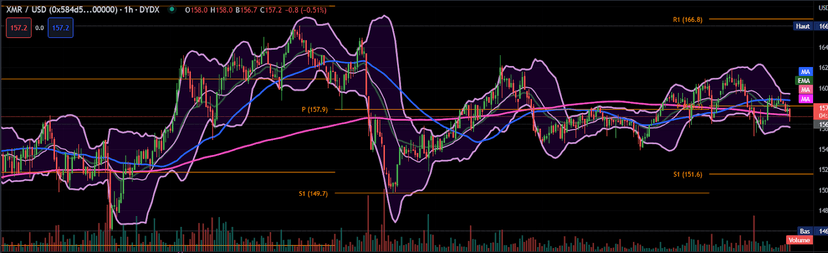
Bollinger Bands can be used on any type of timeframe, so we can infer that they could be useful in scalping. That said, this remains to be verified, because I don’t use them myself. Above all, it’s an example of how they can be applied.
When price is close to the upper band, it indicates that the market is overbought and that price is likely to fall. Conversely, when price is close to the lower band, it indicates that the market is oversold and that price is likely to rise.
Given that it’s a visual tool, its interpretation can be instant! If you’re confident you’ve mastered the tool because you’ve run a genuine series of backtests, then Bollinger is likely to be worthwhile, because you’ll be able to act quickly!
Reminder: Bollinger Bands should be used in confluence with other indicators to draw credible signals from them, otherwise it would be too easy Anyone who relies on a single indicator without a perfect command of price action and complementary indicators has no chance of being profitable in the long run.
Scalping and Fibonacci
Fibonacci is a genuinely effective tool for identifying support and resistance levels on crypto markets. Both I and Fibo Starter (a true Fibonacci enthusiast) very regularly use the method built around Fibonacci retracements.
Before taking a trade, I systematically use this tool, which is based on the Fibonacci sequence, a mathematical sequence where each number is the sum of the two preceding ones. During my technical analysis, I very rarely forget Fibonacci when it comes to buying or selling.
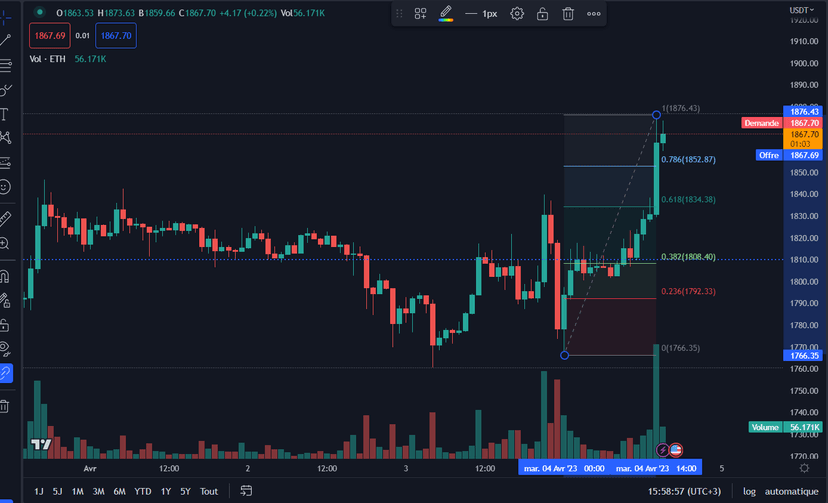
Fibo, as it’s called in the jargon, helps identify key levels when we bring our simple support and resistance levels into confluence.
I use it almost daily to optimize my scalping and quickly identify support and resistance levels.
This tool is also useful for spotting the levels at which price is likely to reverse on short timeframes. So it stays effective when I trade aggressive scalping. In short, Fibonacci retracements are a powerful tool whose mastery can’t be neglected if you want to master my method, price action, and turn a profit.
Scalping Strategy: Bollinger Bands + Fibonacci Retracements
A scalp trading strategy using Bollinger Bands and Fibonacci retracement could be effective.
You can use Bollinger Bands to identify overbought and oversold conditions, and use Fibonacci retracement to identify support and resistance levels. You can then take advantage of small price moves in the market to make quick profits.
However, it’s important to note that scalp trading requires discipline, focus, and patience. You must always use risk management techniques to minimize losses and maximize profits.
How Do You Bring Bollinger and Fibonacci Into Confluence?
First, you use Bollinger Bands to spot entry and exit opportunities in the market, because you visually define the oversold and overbought zones.
Bollinger Bands are also a technical indicator that expresses market volatility.
You have a central band that represents the moving average, and two other bands, upper and lower, that widen or tighten depending on volatility. When the bands are tight, it means the market is quiet, and when they widen, it means things are moving! At that point, there are bound to be profits to be made in the market! In scalping, we look to capitalize on short moves. So we’ll wait for the Bollinger Bands to be relatively wide before entering.
Next, you use Fibonacci to determine the significant support and resistance levels in confluence. Fibonacci will help us identify the key points where the market is likely to bounce or reverse. We draw horizontal lines at key percentages, such as 38.2%, 50%, and 61.8%, to see where the market might find support or resistance.
Warning: My Take Here Is Purely Theoretical
Personally, I don’t use Bollinger Bands to scalp. That said, it’s up to you to decide whether this technique suits you or not, depending on your personality. Plenty of traders claim to be profitable thanks to Bollinger Bands, so why not.
Try it first on a demo account to see whether this strategy is profitable for you: paper trading and backtesting are always essential once you’ve defined a clear strategy.
Whatever indicators or methods you use, keep in mind that you’ll need to be ultra-responsive. So I encourage you to favor every tool and indicator that helps optimize and shorten your decision-making process.
Example of Confluence Between Fibonacci and Bollinger Bands
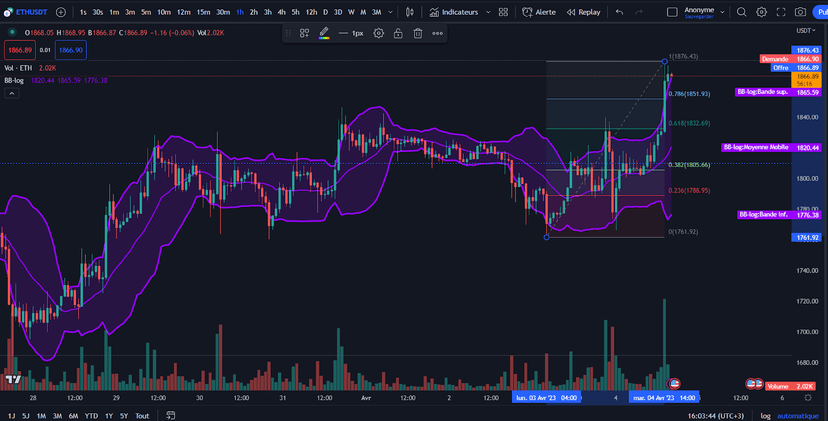
We wait for price to touch the upper or lower band, and we check whether we’re near a Fibonacci retracement level. If so, we can enter a position, aiming for a quick gain and placing a stop-loss that’s fairly tight but not too tight, to limit our losses.
Once you’re in the position, you have to watch for exit signals. If price bounces off a Fibonacci retracement level and turns back the other way, it’s time to exit the trade and bank our gains!
General Tips for Scalp Trading
To get consistent results in scalp trading, you should follow certain tips and best practices:
- You must always use a trading plan and stick to it.
- Use risk management techniques to minimize losses and maximize profits.
- Show discipline, focus, and patience.
- Use the right tools and the right strategies.
- Have a clear bias and keep the news ultra-fresh at hand.
My Tips and Strategies
First, here are the trading platforms I use to practice scalping:
- Bybit: a high-performing centralized platform for scalping, extremely smooth, deep in liquidity, with reasonable fees.
- OKX: a regulated, reliable platform offering advantageous services for scalpers.
The trading method I use first and foremost is price action. This method is based on analyzing past and current price movements to predict future ones. It’s very effective for scalp trading, because it lets you quickly spot trends and trend reversals.
Thanks to the price action method, I’m able to make small but frequent profits by buying and selling short-term positions. This method requires great responsiveness and solid risk management to avoid heavy losses. So I strongly recommend price action analysis if you want to improve quickly at scalp trading.
Below you’ll find an example of a trade executed with my scalping method.
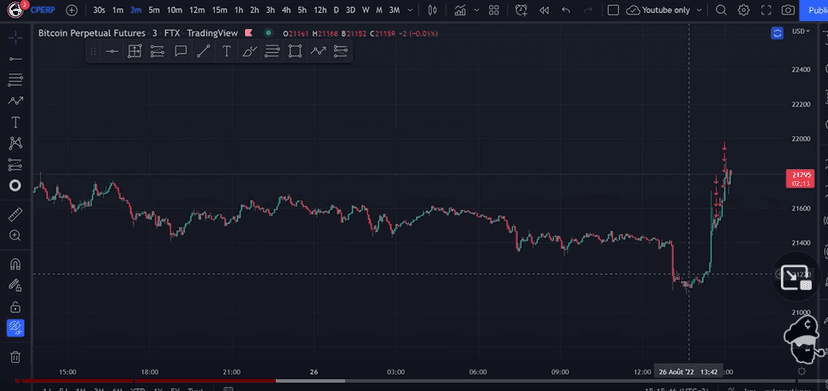
POP CORN SETUP: to be able to spot it, you need to have taken the time to train your eye.
Daily visual practice is essential to become effective.
In the example shown, the risk/reward is 3 to 1. By staking $500, I make $1,500.
LOCATE: read the price action, draw the key levels: supports and resistances.
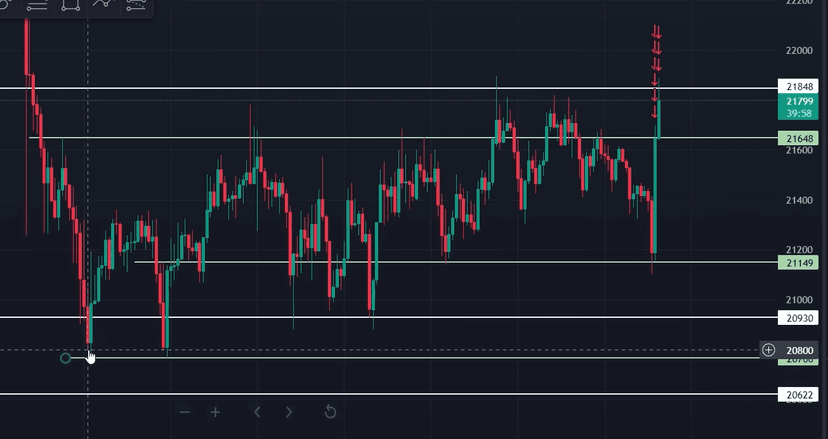
Here, 21648 is the last peak before the sell-off that drops to 20800. So it’s important in our analysis to take this last move into account.
If I add Fibonacci retracements to the chart, it confirms my analysis.
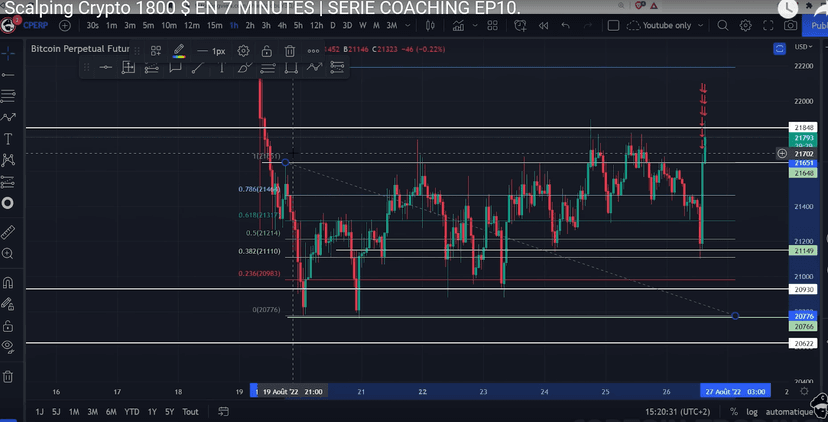
We can see that the Fibo 0.5, corresponding to the midpoint of the retracement, roughly 21200, becomes an important level. Why? Because this level corresponds to the middle of the range.
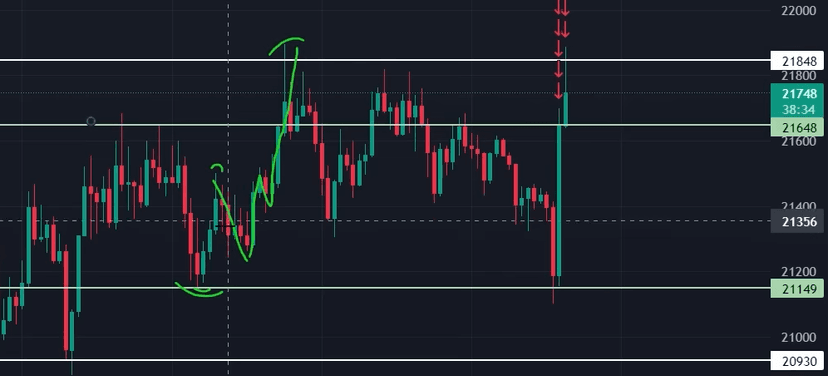
The trough around ~21150 is the origin of the rally that breaks the ~21650 level.
As traders, our goal is to wait for price to come back to this level. To be sure of it, I’m going to zoom in on smaller and smaller timeframes.
Timeframe: 3 min
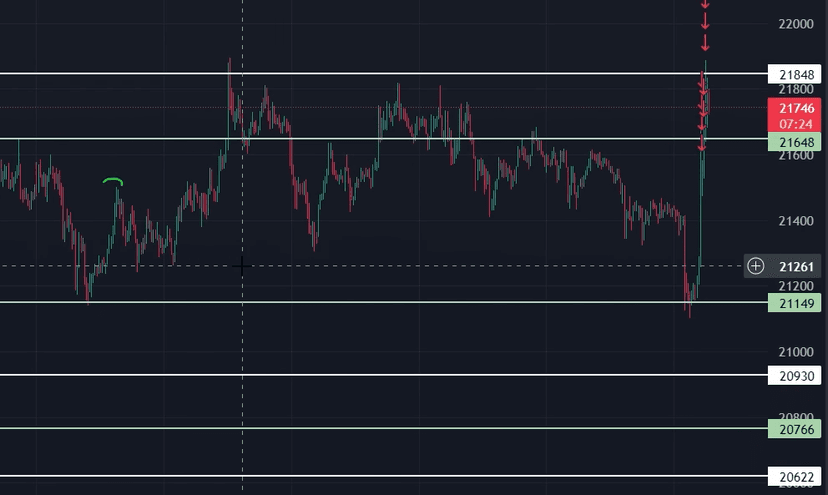
Be careful not to rush: you don’t act on the first reaction. Very often, we’re dealing with a second reaction that’s deeper than the first: that’s what I call the Pop Corn Setup.
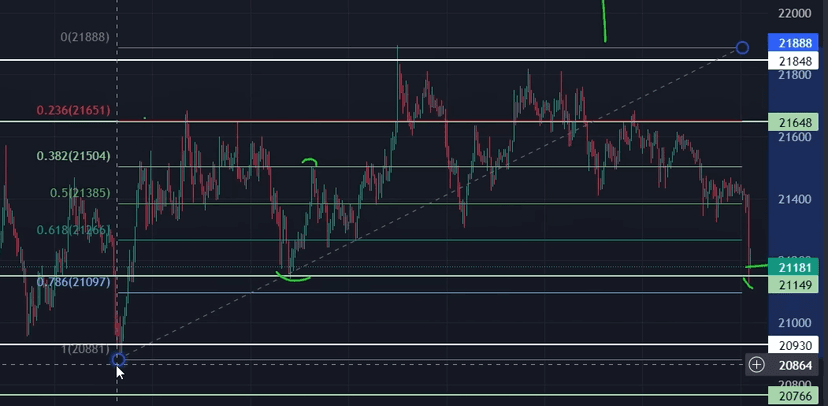
It’s the immediate reaction off the ~21200 trough that interests us. Be careful never to risk more than 4% of your capital, 5% at the very most.
We wait for the first correction, then we look for an entry on a small timeframe: here, 3 min.
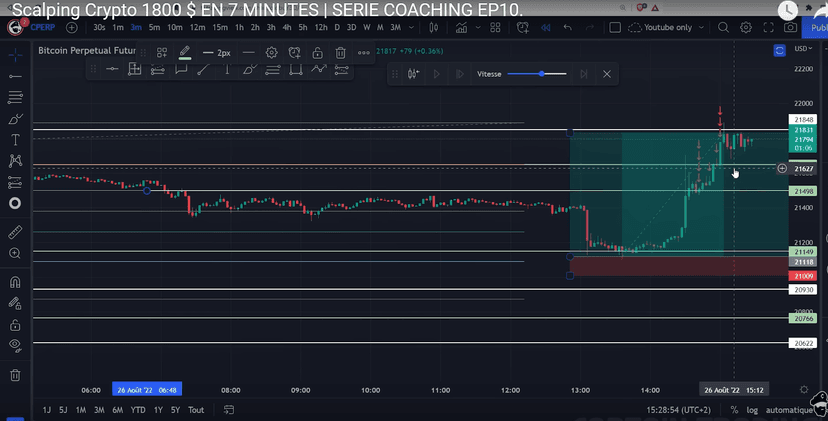
Once price has bounced off resistance at least twice (here, ~21150), you shouldn’t drag your feet getting in. You can keep a small entry window, since absolute precision is impossible. You can also place a limit order after the first bounce, waiting for a small pullback.
Next, it’s essential to find the right exits: 1) ~21500 2) ~21650 3) ~21800, as well as 4) the stop-loss.
So it’s about placing limit orders where price is most likely to rise.
- 21500: this first exit represents the Fibonacci 38.2, which has already served several times as support and/or resistance.
- 21650: this second exit is also in confluence with Fibonacci.
- 21800: a third programmed TP, corresponding to a former peak.
Gains on this trade: $1,800.
This is a powerful trade in terms of win/loss ratio: a very high R (+R3). In all honesty, it’s rare for me to reach such an R. I usually settle for lower Rs (x1.5 / x2).
Common Mistakes to Avoid
Scalp trading requires discipline, focus, and patience. You must avoid certain common mistakes that can lead to losses.
1) You must never trade without establishing clear, precise risk management based on your capital and your personality. You must always know how much you’re risking: always between 1% and 5% of your capital, or even 0.5% or 0.25% when you’re a beginner. On this, see all the resources I’ve put online for you.
2) You must avoid chasing the market and making impulsive decisions. Acquiring and keeping a trader’s mindset is essential if you want to last over time. For example, if you take a loss, don’t try to jump straight back into a trade to “win it back”: that will be a guaranteed second loss, probably worse than the first.
3) You must avoid trading without a plan. Establishing a daily routine to analyze the market from the big picture (Monthly and Weekly timeframes, the US, Asian and European markets, the dollar index, etc.) down to the finest ones (4H, 1H, 15 min, 3 min, etc.), and drawing supports and resistances on these different timeframes, is essential before taking a single trade.
4) You must avoid using too many indicators and tools. As for me, my favorite indicators are Fibo, RSI, and the Chop Index. That’s more than enough to round out my price action analysis. Too much information kills the information. It can cause confusion and lead you into poor decision-making.
5) You must never take a trade without using stop-loss orders to limit your losses.
6) You must never take a trade without using an appropriate position size to manage your risk.
7) It’s entirely possible to trade in your own bubble, staying out of the news that could affect objective decisions tied to price action.
Scalping: Pros and Cons
Practicing scalping can offer several advantages compared with swing trading:
- Fast, regular profit opportunities: scalping lets you make quick profits by exploiting short, fast price moves.
- Less risk: since positions are opened and closed quickly, the time spent exposed to market risk is smaller.
- More flexibility: you can use scalping on a wide variety of markets, including currencies, stocks, commodities, and also cryptos.
However, there are also drawbacks to consider, such as:
- High fees : exchanges charge brokerage fees more often, which can eat into profits. The margin, and the profit, is necessarily smaller when you place many orders. Calculate your reward carefully so you don’t get caught out!
- High stress: scalping demands intense focus and can be stressful. Personally, I find swing trading more stressful than scalping, because once I’ve finished my scalping session, I can put myself “on pause” and dial down my alertness considerably!
- Costly mistakes: mistakes can be costly in scalping, because traders are exposed to higher risk, since making profits in scalping requires leverage.
One extra tip: avoid scalping from your phone, a misplaced tap can turn out to be catastrophic!
Conclusion
Scalping the financial markets is very profitable once the technique is mastered. Personally, this trading style suits me perfectly!
To get results, I mainly use Price Action analysis before taking a position, and I round it out with Fibonacci retracements. Bollinger Bands may also be of interest to you, but personally, I don’t use them. They can be a good tool, but I don’t know them well enough to give you convincing examples of how to use them.
Don’t forget these tips: you must always follow best practices in line with your personality and implement a solid method that includes a trading journal, a trading plan, sound risk management and precise money management, and so on. Be disciplined, alert, and patient. By following these tips, you’re headed in the right direction!
Every guide here is free. Browse the full course and join a community of traders who share ideas every day.