Futures contracts, better known as “futures”, are derivative instruments that let traders and investors speculate on the future price of an asset such as Bitcoin, without having to physically own it — unlike buying on the so-called “spot” market.
When you hold a futures contract, you don’t actually own the cryptocurrency in question, but you can “bet” on its price rising or falling. The goal is to book a profit if the price moves in your direction.
Futures, forward and perpetual contracts — what are they?
In traditional finance, a futures contract is a financial instrument that lets you commit in advance to buy or sell an asset at a predetermined price and date. This type of contract can be used to protect against risk (hedge) just as much as for speculative trades.
The perpetual contract, for its part, is identical to a futures contract but differs on one essential point: the expiration date. While traditional futures contracts usually have an expiration date, crypto futures contracts often have none.
Futures contracts are therefore essentially derivatives designed to closely track the price of the underlying asset. By holding a futures contract, you don’t own the cryptocurrency, but you can speculate on the price going up as well as down.
The appeal is to make money if the price moves in the direction you anticipated.
How a futures contract works
A futures contract is a commitment between two parties: a buyer and a seller.
As long as the contract isn’t closed, neither of the two parties is ahead.
No one has gained or lost anything before the contract expires.
When a trader buys a futures contract, they are obliged to sell it at expiry.
By the same logic, if a trader sells a futures contract, they are obliged to hand over the contract on its expiration date.
Here’s an example to illustrate this:
Say you expect the price of Bitcoin to rise. Let’s assume you bought a futures contract for 1 BTC at 25K.
At expiry, three outcomes are possible:
- At the contract’s expiry, the BTC price has risen to 28K.
As agreed in your futures contract, you bought 1 BTC at 25K, which you resell on the market at 28K. You’ve made a 3K capital gain.
2. At the contract’s expiry, the BTC price has stalled at 25K.
As agreed in your futures contract, you bought 1 BTC at 25K, which you resell on the market at 25K. You’ve lost nothing and gained nothing.
3. At the contract’s expiry, the BTC price has dropped to 20K.
As agreed in your futures contract, you bought 1 BTC at 25K, which you resell on the market at 20K. You’ve lost 5K.
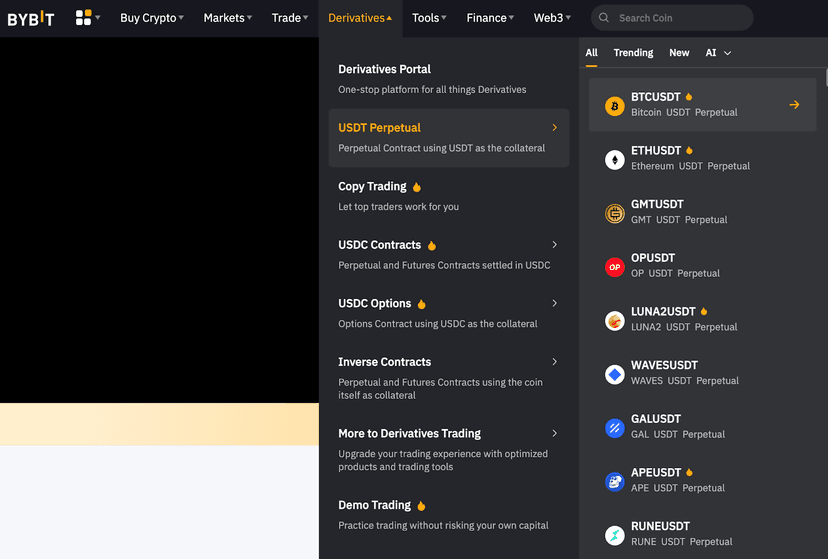
Opening a position with a futures contract
Unlike so-called SPOT buying, traders can speculate on a rise but also on a fall.
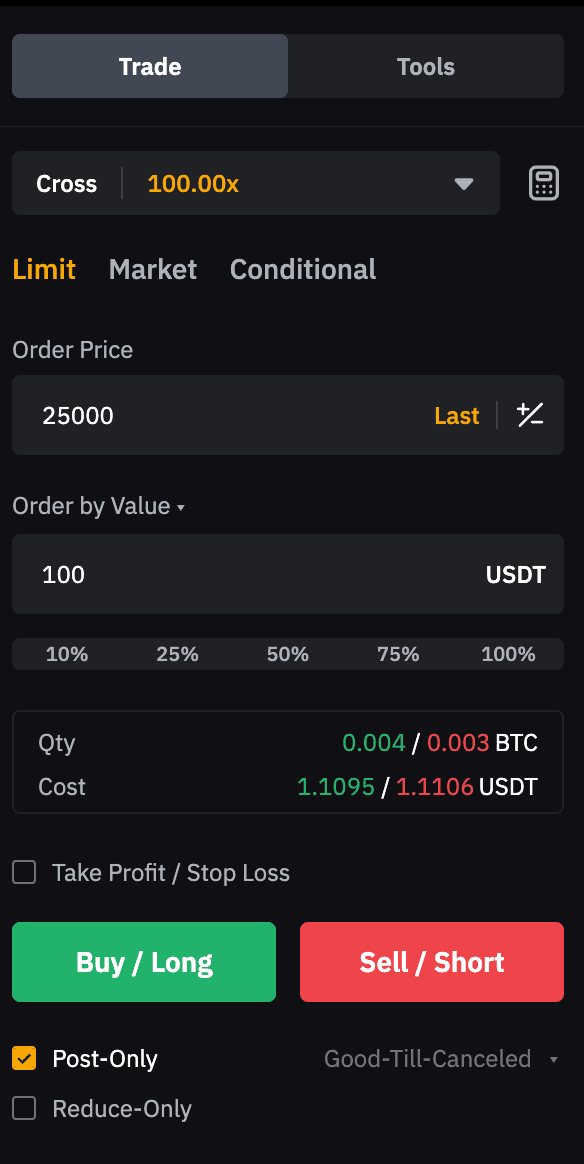
Long position
Taking a Long position means taking a buy-side position. You buy a contract because you think the value of BTC is going to rise.
Short position
Taking a Short position means taking a sell-side position. You sell a contract because you think the value of BTC is going to fall.
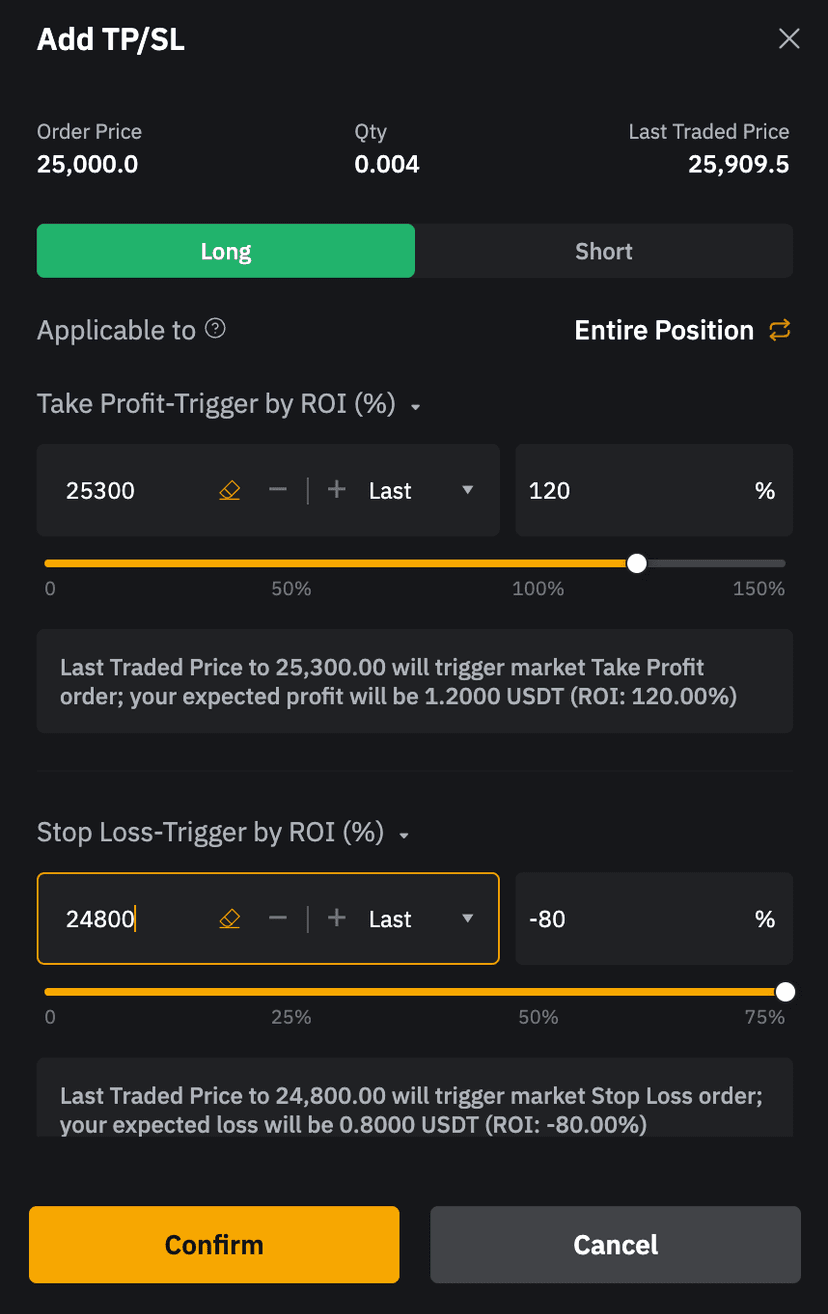
Whether you’re long or short, it’s important to always place a stop-loss on every trade.
Leverage
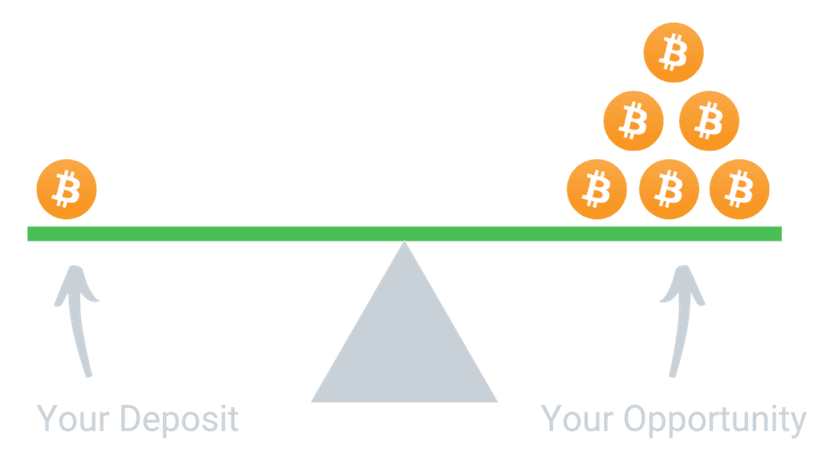
Thanks to the futures market, leverage multiplies your buying or selling power so that you can trade with more capital than you currently hold in your portfolio.
Leverage is expressed as a ratio – such as 1:5 (5x), 1:10 (10x) or 1:20 (20x). This tells you how many times your initial capital is multiplied.
For example, if you have $100 in your exchange account but you want to open a position worth $1,000 in bitcoins (BTC), 10x leverage will give your existing $100 position the same buying power as $1,000.
Hedging with a futures contract
Futures contracts let you hedge against a correction … whether upward or downward; the idea is to cover the risk of a future rise or fall in an underlying product. This is what we call hedging.
That is precisely what hedging operations consist of: using financial leverage to cover your main positions and smooth out the profitability of a strategy.
Example:
On Bitcoin, after a sharp drop, you decide to buy 1 bitcoin on spot because it’s an attractive zone in your DCA strategy (DCA course).
However, you fear a bearish continuation. You can therefore open a sell-side (short) position on BTC to hedge your SPOT purchase in case the downtrend continues.
Advantages of futures contracts
Leverage is probably the most important and most attractive feature of futures contracts, allowing traders to maximize profits by speculating on futures with the limited capital they have.
One of the main advantages of crypto futures trading is how easy it is to speculate on the price movements of the underlying assets.
Futures contracts also raise the question of ownership: if you buy a futures contract, you don’t actually own the underlying crypto asset, only a contract that simply represents it.
Futures contracts are therefore a good hedging tool for covering positions in the financial markets and protecting yourself in times of crisis.
Drawbacks of futures contracts
While leverage is one of the main advantages of trading futures contracts, it’s a double-edged sword, because reckless use of leverage can wipe out your capital.
Futures contracts give traders far more flexibility in their trading strategies, because they can take LONG and, above all, SHORT positions on the asset’s price — something that isn’t possible in SPOT trading.
DYDX futures contract example
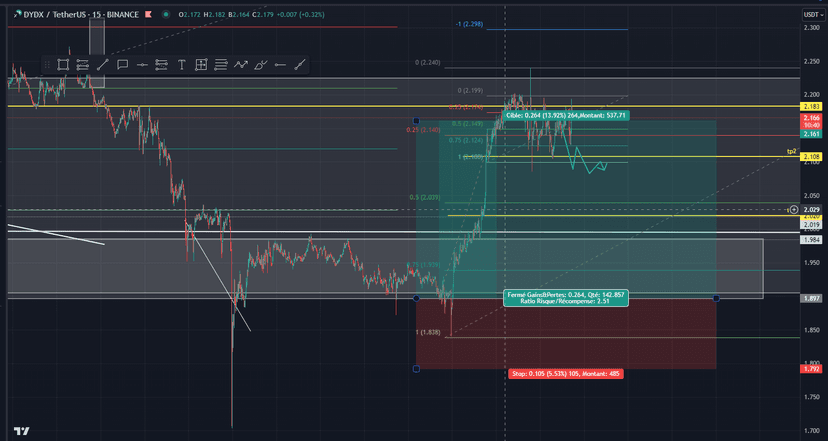
In this example we use TradingView to calculate our position size.
With $500 of capital and a 3% risk if the stop-loss is hit, we need to buy 142.85 dYdX. Then we head to the trading platform to enter our trading plan.
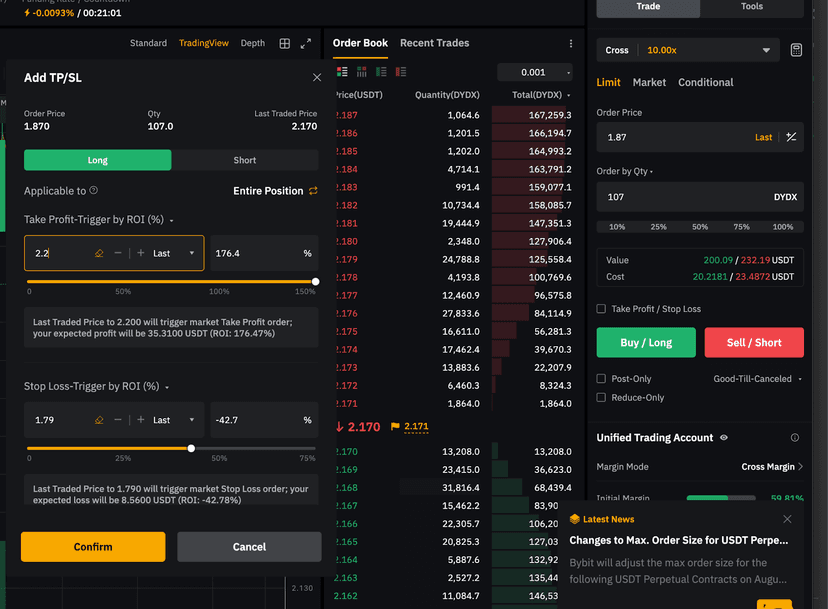
The required leverage will be calculated automatically by the platform. In this case I’ve capped the leverage at 10x, but our loss will be held to 3% because we’ve protected the position with a stop-loss.
My Take on Futures Contracts
Futures and perpetual contracts are financial tools that let you easily speculate on an asset without having to own it. Their appeal comes down to two key points:
- leverage, to multiply your starting capital and boost your profits
- the ability to speculate on the downside!
Futures contracts — I trade them every day on Bybit and Delta Exchange, so I think my view on the matter is pretty clear
Every guide here is free. Browse the full course and join a community of traders who share ideas every day.