Most beginner traders never manage to clear the levels that are nonetheless required to grow and become a pro trader. Some do make money quickly, then discover just as fast that they simply got lucky: they didn’t have the skills they thought they had.
Every trader goes through many stages in their development, sooner or later. They’re very hard to avoid, believe me! The road to success is long and full of pitfalls. Here, in my view, are the 6 essential levels to become a professional trader — a near-inevitable process that everyone who succeeds in the financial markets goes through.
Level 1: The Beginner Trader Who Doesn’t Know That He Knows Nothing
A rookie has no knowledge of how the markets work or how traders actually make money. Most newcomers think that profitable traders can predict future price action and make money by always being right on every trade.
A novice tends to think that a good online trader earns steady returns every day and every week. Very often, they start out hunting for the trading Holy Grail that would let them win on the financial markets every single time…
Let me tell you right now: the Grail is a legend, and like every legend, it holds only a small grain of truth! You can put together an excellent trading strategy with a win rate hovering around 50% as long as your risk management is sound. Trading is a profession reserved for those who know how to lose, so don’t get it wrong.
It’s easy to look for shortcuts, but there aren’t any. A trader takes losses regularly — that’s normal. By the way, winning 50% of your trade plans and trades is more than enough to become profitable, provided you have a good grip on your risk/reward ratio.
At this stage, the rookie knows nothing… but he probably doesn’t even know that.
Level 2: Paying to Learn Trading
There are two possible paths here. A serious beginner will start educating himself by reading trading books, by studying charts and price action, by taking trading courses (online or not), and by learning system development, backtesting and paper trading. There’s also an endless supply of freely available resources to practice trading for free or learn to trade for free, notably through our guides on the basics of trading.
Those traders are on the right track.
The other path that many new traders choose is to jump straight in with real money. That is obviously not what I recommend.
Note that every trader pays for their education: in time, in study, in experience and in trading losses. It’s better to learn as much as you can about trading before risking real money. A book on risk management costs a lot less than trading with an oversized position.
Thinking you can start trading with no plan and no system, and consistently beat other traders, is a sign of foolishness, arrogance, or both at once.
You’ll have to pay to learn to become a trader, and you’re the one who chooses the cost of the lessons.
Level 3: The Trading Reality Check
At this stage, you’ve either studied enough to know how to go about it, or you’ve blown up your first account and you’re finally ready to study trading seriously. Come on, let’s keep going…
When a beginner trader realizes that trading has nothing to do with “easy money,” he finds himself at a crossroads between quitting and doing the work.
If a trader has put real money on the line or seriously studied win rates, transaction costs, withdrawal fees and so on, he starts to realize that trading is a professional activity that can generate big gains but also carries significant running costs. This is precisely where trader psychology comes into play, and brutally so.
When the reality of trading sets in, the true trader chooses to do the work needed to succeed, or he runs off to look for easy money somewhere else.
Level 4: Information Overload and Choosing a Method
At this stage, a trader receives all the information he needs to start trading, but he knows so much that he starts getting contradictory information.
A momentum trader says you should buy the breakout, while a swing trader says you should short-sell at resistance.
A day trader says overnight risk is too dangerous, while a trend trader claims the big profits are found in long positions held for several weeks. Some systems rely on high win percentages, while others focus on a few big wins and then manage many small losses.
Once a beginner has understood price action, technical analysis and risk/reward ratios, he has to start choosing and building the method that suits him best: scalping, swing trading or a long-term strategy like DCA.
Then come the following questions:
- Which timeframes am I going to trade?
- What win rate should I aim for?
- What risk/reward ratio will define my style?
- What are my personal strengths?
Once a trader has all the information he needs, the next step is to filter out the pieces that suit him best.
Level 5: Building Your Edge (Statistical Advantage)
At this stage, the rookie has truly decided to become a pro trader — he’s convinced of it! He filters all of his knowledge and picks what he’s going to put into practice to start building his own trading system.
Often, a trader tries to build the perfect system, searching for the strategy that never loses — in short, the Holy Grail. Careful, it’s a trap… one that many traders have gotten bogged down in until they realized it doesn’t exist.
You then move from the idea of a perfect system to one that’s simply profitable.
A trader then chooses a method that fits his screen time, his risk tolerance, his return targets, his personality and his belief system.
Based on his affinities, he chooses the markets he’s going to trade: stocks, currencies, options, futures or cryptocurrencies. He can lean on proven technical indicators like the RSI, the Moving Average or Bollinger Bands.
He has filters to build his watchlist. The pro has run long series of backtests and paper trading to identify real advantages in price patterns. He now has signals with a positive profit factor over large data samples.
The pro trader has a statistical edge over other traders, because he knows which types of setups are generally profitable over the long run — provided he cuts losses quickly and lets winning positions run.
Level 6: The Independent Trader’s Profitability
Becoming a pro trader implies that you’ve become profitable, because you’ve built a trading system with a positive expectancy over time. The pro trader applies it with discipline and consistency. He’s moved by neither losses nor profits, because they’re an integral part of any winning system.
A good trade is one that was executed according to the plan, with discipline. Conversely, a bad trade is one that follows neither its stop nor its take-profit targets.
The pro trader has become a disciple of price action and trades only his own signals. He takes the path of least resistance and doesn’t chase short-term profits at any cost.
At this stage, the trader trusts his system and his ability to execute it. He stays within the limits of his risk management guidelines and keeps his losses under control.
His position sizing is calculated precisely, so that each trade is just one trade among the next hundred. That’s how emotion becomes a thing of the past.
In the final phase, the trader is a manager who runs his trading system like a business and reaps the benefits of his edge over the long term.
Once you’ve reached all 6 levels, it’s entirely possible that you can turn trading into a profitable activity… But hey, it’s nice to say — actually doing it is another matter!
In the meantime, I recommend you keep learning more and more so you can build your own system — whether it’s that of a day trader or a swing trader whose orders sit quietly waiting on the interesting levels…
Which Trading Platforms Should You Start With?
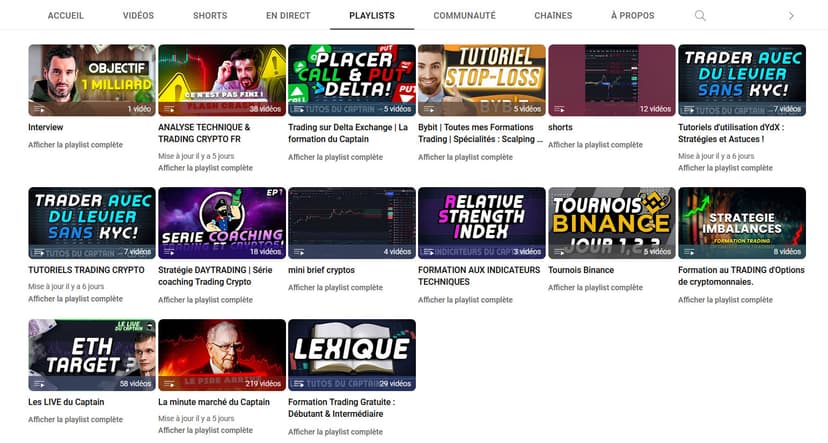
To learn a bit more and maybe even become a pro trader, I first recommend my free trading course on YouTube. It’s worth watching and rewatching, since I regularly add new modules to it. If you haven’t fully mastered it, I first recommend signing up on suitable platforms to practice on their testnet!
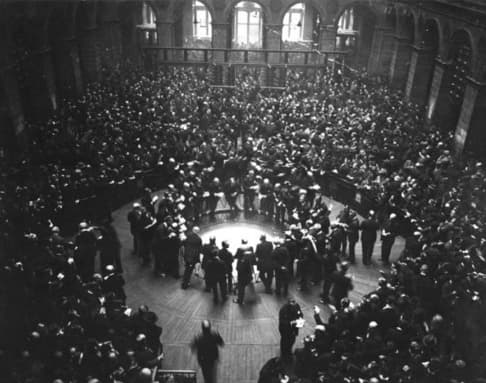
These days, traditional trading floors no longer exist. In any case, they weren’t really suited to independent traders like us. Today, you can operate on various trading platforms that are more or less easy to access. This is precisely one of the advantages of crypto: how easy it is to step into the markets quickly. Among the serious, regulated exchanges, OKX remains a recommended go-to for getting started in crypto, thanks to its reliability, its security and an interface suited to beginners and seasoned traders alike.
If by chance you decide to jump onto a trading platform (a little too) quickly, please do it with an ultra-small starting capital! Whatever happens, you have to understand that 80 to 90% of traders lose, so don’t assume you’ll be the exception in your very first month.
Careful — before placing real buy and sell orders: practice and train yourself, no exceptions!
The Best Training to Become a Pro Trader
There are 2 main types of training to become a trader:
- the traditional route of business and trading schools
- online courses, which are more accessible and flexible
Buying and selling on the financial markets isn’t done at random; I’ll say it again: train yourself, no exceptions, before you get into it!
On captain-trading.com, we offer several different types of online training:
Going Further: The Pillar Guides
Becoming a professional trader isn’t about clearing a single level but chaining them all together, over and over. To support you on this journey, here are the free guides that genuinely structure a trader’s progression, from beginner to profitable trader:
- Risk management: the first building block, the one that keeps you alive when your win rate hovers around 50%.
- Building your trading strategy: to filter out information overload and choose a method that truly fits you (Level 4).
- Trader psychology: the wall everyone eventually hits at Level 3, the one that separates those who hold on from those who give up.
- Building your trading system: the goal of Level 6 — running your trading like a business with a positive expectancy.
FAQ: Becoming a Professional Trader
How long does it take to become a pro trader?
There’s no fixed timeline: everyone goes through the 6 levels sooner or later. Generally, expect several years between your first lessons and truly consistent profitability. What speeds up the journey isn’t the money invested but the quality of your training, backtesting and discipline.
Can you become a professional trader starting from scratch?
Yes, but on one condition: accepting to pay for your education in time, in study and in controlled losses, rather than by blowing up a real account. Start by practicing for free, study price action and take care of your risk management before committing a single euro.
Do you have to be right all the time to be profitable?
No. A profitable trader can be right just half the time. What makes the difference is the statistical edge and a well-managed risk/reward ratio: cutting losses quickly and letting gains run.